McMaster engineering project
Get a Grip: Robotic Arm
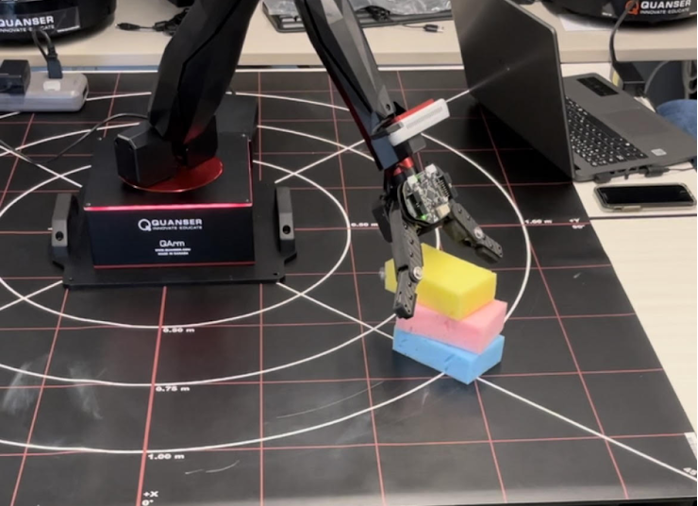
Programming a robotic arm to securely transport a surgical tool to an autoclave for sterilization.
The challenge
Move a surgical tool securely using human muscle signals.
Our team was split into modelling and computing subteams. The challenge was to design a system that could securely transport a surgical tool to an autoclave for sterilization without compromising the sterilization process.
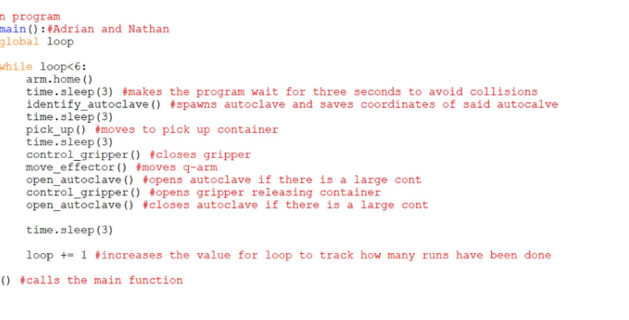
I worked on the computing side, writing Python code that used input from electromyography (EMG) sensors placed on a person’s arm to operate the robotic arm.
Approach
Start with the workflow before writing the code.
We began with whole-team brainstorming so that the modelling and computing work stayed connected. Within the computing subteam, we developed pseudocode and workflow charts before I began implementing the program.
Simulation
Test the logic before moving to hardware.
I first built the program for simulation software that could mimic real-world physics and object interactions. This allowed us to tune the robot’s movements and predict performance before physical testing.
Result
A small change separated simulation from real-world use.
Once the simulated behaviour was working, only modest changes to the input section were needed to prepare the program for real-world testing. The project reinforced the value of building a testable model before committing to hardware.
Project gallery
From concept to evidence.