McMaster engineering project
Source Water Monitoring
A remote monitoring system designed to detect harmful algae while minimizing environmental impact and unnecessary trips for water testing.
The challenge
Monitor remote lakes without creating another environmental problem.
We were challenged to design an Ontario-lakes source-water monitoring system for remote areas that could accurately detect harmful algal blooms while minimizing environmental impact and unnecessary trips for testing.
The project required stakeholder identification, qualitative error analysis and the PERSEID method to consider performance, environmental, regulatory and socio-cultural factors alongside engineering decisions.
The concept
Use a drone and sensing system as the monitoring backbone.
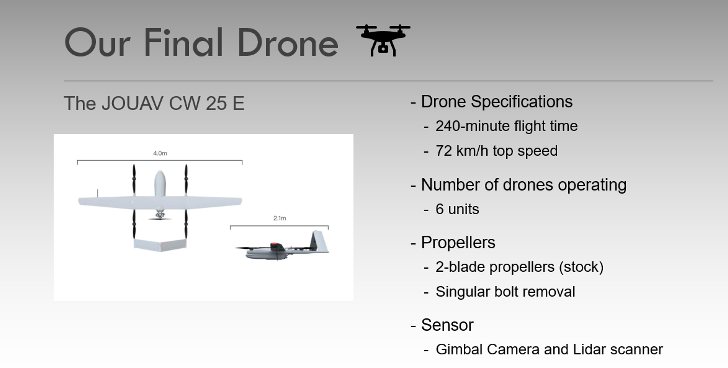
After researching the region, algae-identification approaches and ways to obtain imagery and samples, our concept used a CW-25E drone paired with the LTSM algorithm and a lidar sensor. The system was intended to provide continuous monitoring and early warning for outbreaks.
Design consideration
Reduce disturbance while keeping the system practical.
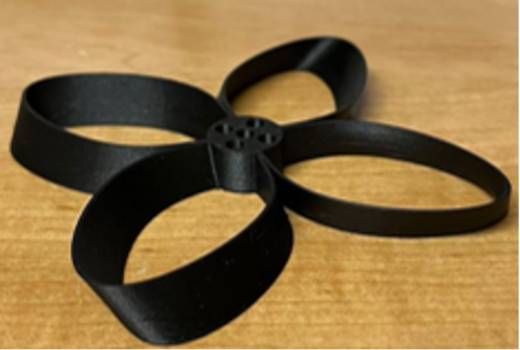
We explored toroidal propellers designed to improve performance and reduce noise. The implementation plan also covered test flights, data collection and analysis, infrastructure and app deployment.
What I learned
Engineering design is more than the technical subsystem.
The project required technical, environmental, social and economic constraints to be considered together. It reinforced how much the surrounding system — operations, community impact, testing and deployment — shapes a technically viable solution.
Project gallery
From concept to evidence.